

More than 10 years ago, when I was still working as a planner, I often said "I feel like..." in meetings or brainstorms while looking for a direction, idea, or insight.
"I feel" is usually seen as subjective and vague in the workplace because it relies on emotions—especially for a planner in an era where everything has to be data-driven, which people often interpret as strictly quantitative or, bluntly, backed by numbers. Even in soft-skill trainings back in college, we were told the same thing. If you keep saying that, people will dismiss you as someone who works on gut feeling.
But have you noticed how often those gut-feeling suggestions end up being the right answer to the brief—or how skipping them leads to regret, like "ugh, I just knew that would have been the right move"?
According to the Enneagram—a personality framework I use to understand myself better—a person can fall into one of three main "centers of intelligence": the heart/feeling center, the head/thinking center, and the body/instinctive center. Feel free to read more about the Enneagram if you want.
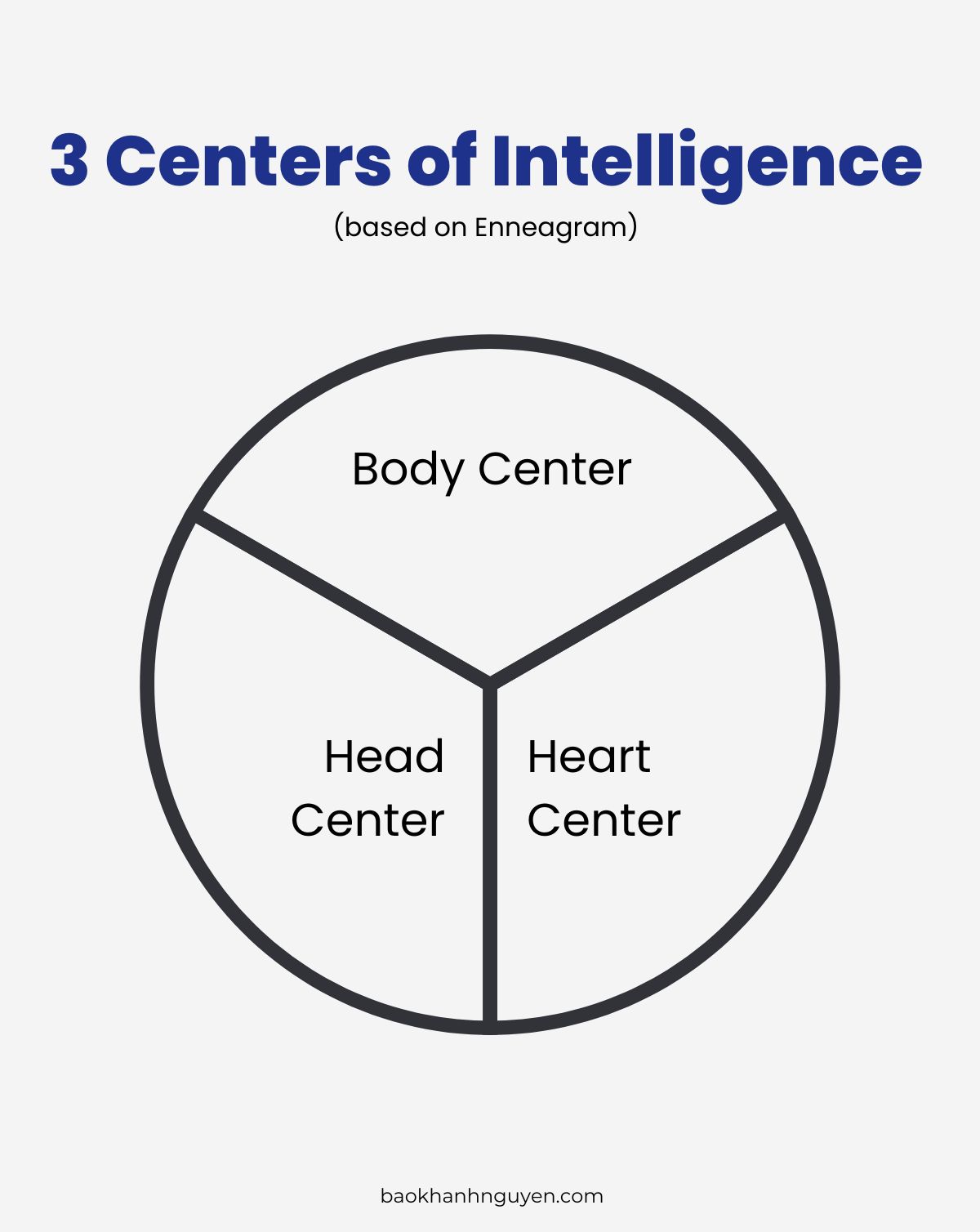
Those in the heart center tend to think and decide based on emotions; those in the head center lean on reasoning and logic. So what do people in the body center rely on when they think and make decisions?
Signals from the universe.
Congrats to everyone who proudly claims they get messages/signs from the universe—you’re probably in the body center (jk).
Everyone has intuition, but people in this center have a stronger ability to "instantly recognize something without knowing why they know it." From a spiritual point of view, it’s because they’re more connected to the universe.
Once, I heard my boss talk about the Lunar New Year insight we were chasing. Instantly, an idea popped into my head for a beverage brand. It was risky, but I felt incredibly confident even though I couldn’t explain why. At that point, the creative team already had another idea for round one (which the client didn’t approve), so I waited until round two to speak up. The moment I pitched it, the team split—half for, half against. Obviously there were no numbers to back such a risky direction. Thankfully, leadership and half of the creative team believed in me, so we went for it and sold it to the client. That idea the "universe whispered" got approved on the spot, the brand’s Tet sales jumped x0% (with x being that algebra symbol from high school), and they kept running it the following year. (If my bosses and ex-teammates are reading this, you probably remember.)
In this data-driven era, how can a planner in the body (or heart) center use this universe-given strength to earn colleagues’ trust and crack client briefs? I’ll share more in Part 2.