

In the past few years, I've noticed a common goal among my clients: reaching the middle class, which marketers often define primarily based on income.
I don't think that's entirely wrong, but it fails to distinguish: does a single office worker earning 10 million VND but attending 3 concerts belong to the middle class? Or is the middle class defined by a married manager couple with a household income of 100 million VND who, after paying for their house, car, and children's tuition each month, still have a positive bank balance?
Today, I read an interesting report by Lightspeed, a major global and Southeast Asian investment fund, where I learned they define the middle class based on 'discretionary spending.'
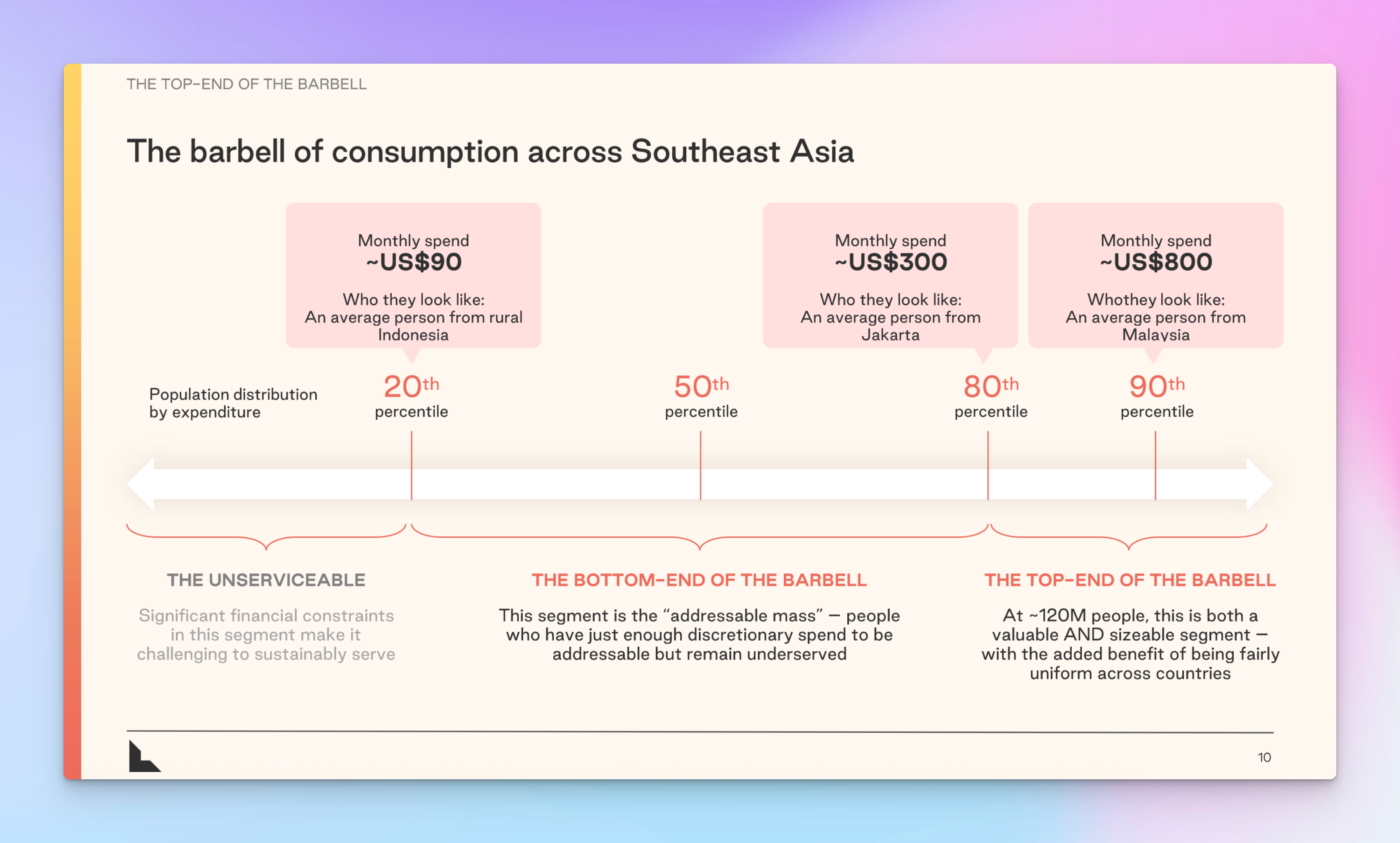
'Discretionary spending' = non-essential spending, including expenses for entertainment, dining out, travel, or activities not necessary for daily life.
Specifically in Southeast Asia (excluding Singapore), if you have $100 - $300 (~2.5 million - 7.5 million VND) per month for discretionary spending, congratulations, you've been upgraded to the middle class. While this figure is an estimate for all of Southeast Asia, from my personal observation, it seems quite fitting—just look back at the office worker who attended 3 concerts above.
That $100–$300 pie looks quite appetizing, and many brands definitely want a slice. One key thing to note is that this figure in SEA is 15 times lower than in the US ($1500–$4500), BUT the expectations of the middle class in SEA are just as high as in the US—frankly, they want 'good stuff' but at a cheaper price.
To get a slice of the discretionary spending pie, brands must meet those expectations while maintaining a stable profit margin, instead of constantly slashing prices in every livestream session.
In conclusion, I feel that the middle class in Vietnam and SEA has a more free-spirited lifestyle and gives the appearance of having more financial freedom, haha.