Have you noticed that when you scroll LinkedIn, creators are happy to give away “templates” in their expertise? For example, comment "SEO" and they'll send you a free “SEO strategy” document; comment "brief" and they'll send you a file of creative brief templates; comment "CFO" and they'll send you an Excel file for a financial forecast.
I used to love collecting these freebies, but they ended up sleeping in my "Downloads" folder, never opened. Some look intimidating when you open them, but you keep filling in blanks and it still doesn't work; rereading it just feels off.
Imagine you're a planning intern one month into the job. Your boss asks you to analyze an industry with no guidance. Chances are the first thing you'll do is find a template to fill in.
That's the problem.
Everything is fast today. At work, people expect you to learn fast. There is little formal training and mostly on-the-job coaching, which makes us crave ready-made formulas, shortcuts, and pre-made conclusions, and the most common form of that is templates.
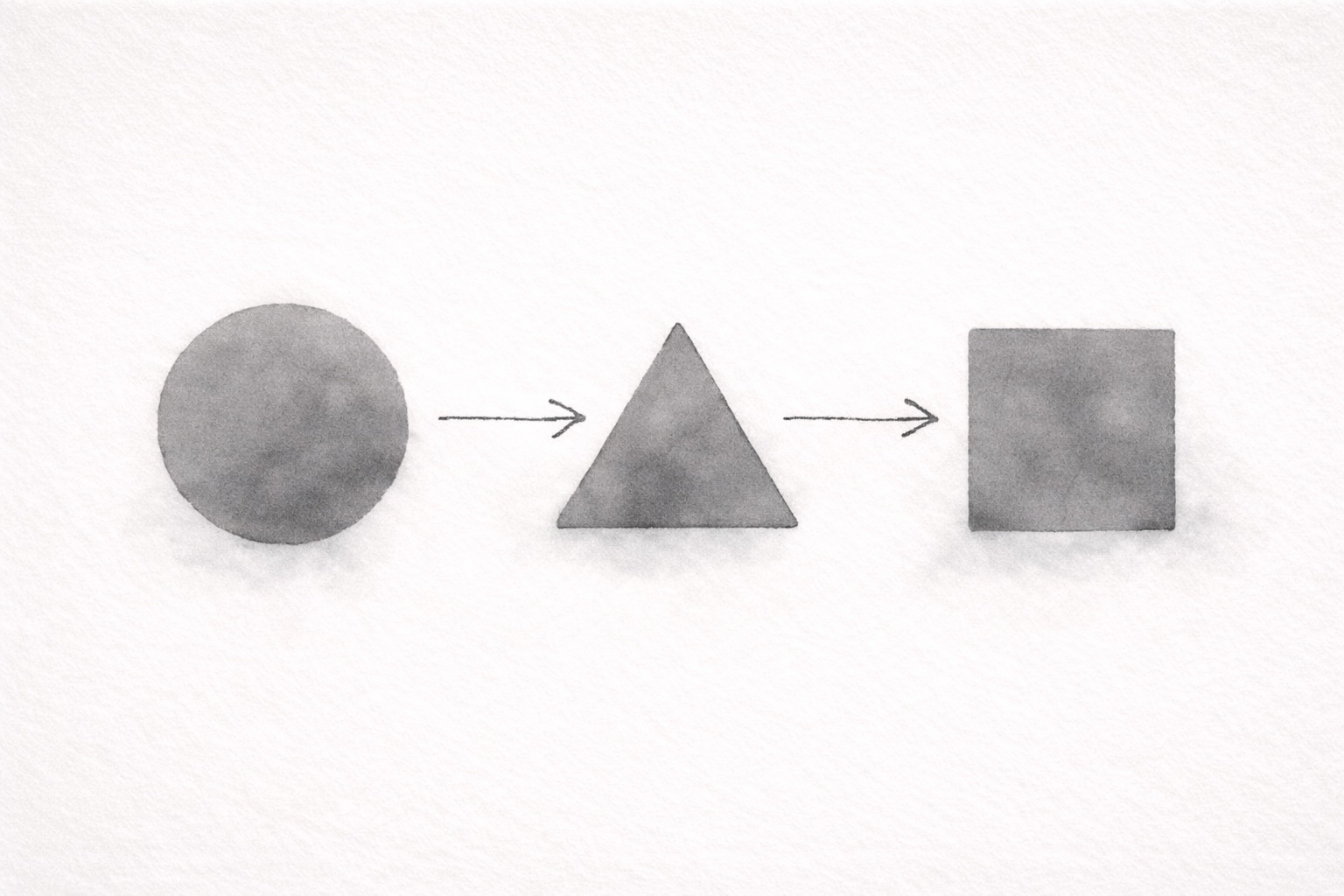
We have too much information, but not enough knowledge. A template is information, not knowledge.
Nine years ago when I started a tech startup, I needed to build a financial forecast to raise capital, and my finance knowledge was zero (despite graduating top of class in corporate finance). The first thing I did was text my best friend Hưng in finance: "Send me a template," and I also searched for more templates. I spent a week tinkering and finished something, but when I sent it out there was only silence from investors. My friend looked at the file and said, "Forget it, I'll come over and spend a night with you." That was the first night he explained how to build a financial forecast and I realized how much I was winging it. Without a thinking foundation, no template can save you. I'm still a failure in finance, but at least I can build a financial forecast well enough that investors judge me a little less.
In marketing, communications, and advertising, there are endless templates, and every agency I worked with had different templates and frameworks. Back then, each new agency felt like a rebirth because I had to adapt to a new template, like creative briefs or brand propositions. Because I was a free-floating flower, I worked with many agencies and later realized those templates were... pretty similar. So a few years ago an agency invited me to join the brand strategy portion of a pitch, but I declined because I was too busy. They asked, "Could you send us the template you usually use so we can fill it in?" No problem, I can send you ten templates, but whether it solves the brief probably requires drawing a tarot deck.
A more modern example: people go to ChatGPT to do consumer segmentation and remind it to present the result in a scary-looking template, and the output feels a little unreal, like "nothing seems wrong." If you feel that way, the good news is you're not alone, and the bad news is your capability will struggle to rise above 5/10 (unless you're happy with that).
Many people think template = the formula of knowledge, just fill it in and you're done. The truth is, to use a template you need a solid knowledge base and a clear line of thinking, so you are NOT DEPENDENT on any template.
Template isn't knowledge; it's form.
That's the approach of the Strategic & Integrated Communication course that I've taught for the past three years. I tell students that if their thinking is solid, then even if they change companies or meet any template/framework, they won't get mentally tangled. And further, when your thinking is rock solid, you can create your own templates.
Wishing you less information but more knowledge every day.